How do we transform a Lean-Agile workflow to an Agentic AI workflow?
That was the first question a VP of a Fintech Fraud Detection and Resolution firm asked me a couple of years back. The following is the workflow and architecture that got us into production, with a lot of help from research done by other companies and individuals.
From Ideation to Production: An Agentic AI Lean-Agile Workflow
Executive Summary
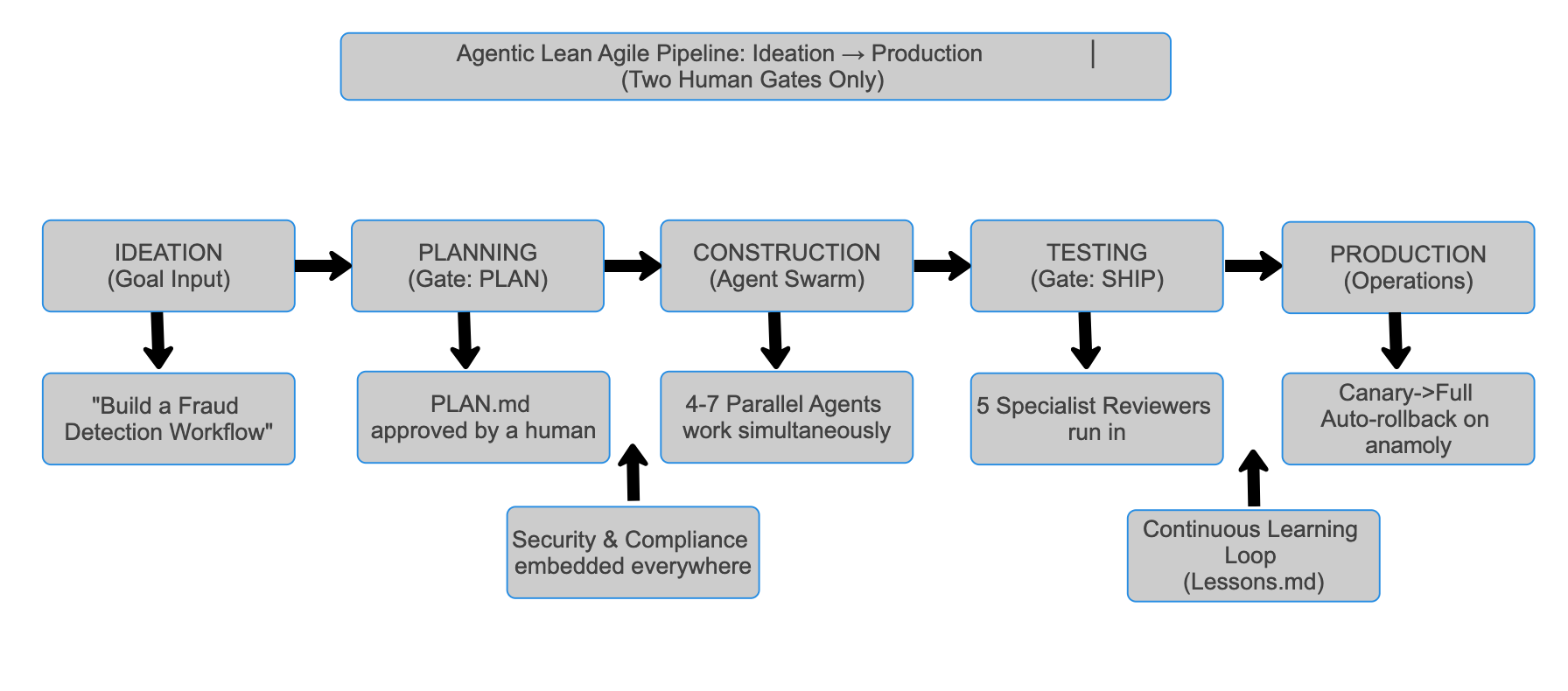
Agentic AI is fundamentally rewiring the Software Development Lifecycle (SDLC). Traditional Agile methods, designed for human-driven, week-long sprints, are being replaced by AI-driven workflows measured in hours or days. This guide is a practical, Lean-Agile workflow that delivers measurable value from ideation through production.
Key shifts in this workflow:
- From tasks to goals — Teams define outcomes; agents orchestrate delivery.
- From serial to parallel — Agent swarms work simultaneously across the stack.
- From heavy gates to lean gates — Two human approval points only (plan + ship).
The Core Philosophy: Lean Software Engineering with AI Agents
In an Agentic AI workflow, humans orchestrate, AI agents execute, and both collaborate toward shared goals. This is not about replacing developers — it’s about transforming how work flows through the pipeline.
The New Role of the Developer
Every developer becomes a manager of intelligent agents, responsible for setting outcomes, coordinating workflows, verifying results, and guiding iterations.
“You won’t get hired for knowing Python anymore. You’ll be hired for knowing how to solve problems and manage workflows using software.”
Phase 1: Ideation (Goal Definition)
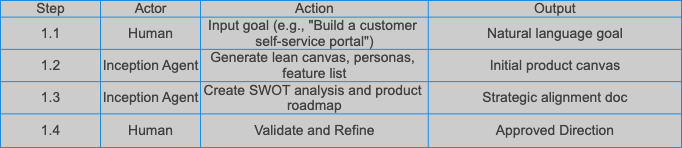
In traditional Agile, this phase begins with requirement documents. In Agentic Lean-Agile, it begins with a goal.
What the human does: Define the desired business outcome, not the implementation details.
What agents do: The Inception Agent translates high-level intent into structured artifacts.
Workflow Steps
Phase 2: Planning (Gate: PLAN)
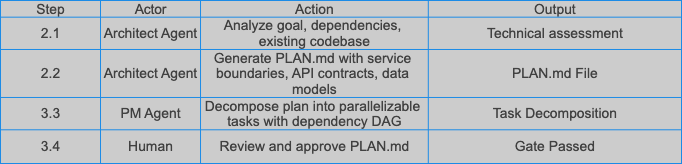
This is the first human control gate. Nothing proceeds to coding without an approved plan.
What the human does: Reviews and approves the architecture plan. This is the cheapest point to change direction — fixing scope here costs nothing.
What agents do: The Architect Agent and Product Manager Agent decompose the goal into a structured execution plan.
Workflow Steps
What PLAN.md Contains
# PLAN.md - Technical Implementation Plan

## Overview
- Goal: Customer self-service portal
- Success Criteria: <2min avg resolution time

## Components (Parallelizable)
- Component A: Auth service [parallel]
- Component B: Ticket dashboard [parallel]
- Component C: Knowledge base [parallel]

## API Contracts
- POST /tickets - Create support ticket
- GET /kb/search - Search articles

## Data Model
- User, Ticket, Article entities

## Security Controls
- OWASP ASVS Level 2 compliance
- Rate limiting: 100 req/min per user

## Testing Strategy
- Unit: 80% coverage required
- Integration: All API endpoints
- E2E: Critical user journeys
Why this works: “Two gates works because they are at the right scope-vs-quality break points. Gate: plan controls scope — if scope is wrong, fixing it costs zero.”
Phase 3: Construction (Agent Swarm Execution)
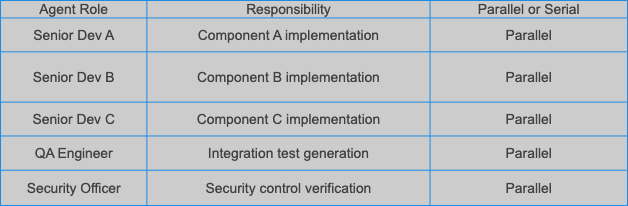
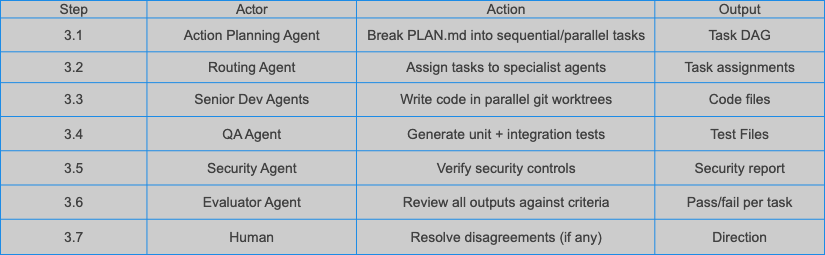
This is where the magic happens. Instead of one developer working serially, 4–7 specialist agents work in parallel on different components.
What the human does: Monitors progress, resolves agent disagreements, provides judgment when needed.
What agents do: Execute coded components, generate tests, review each other’s work.
The Agent Swarm Composition
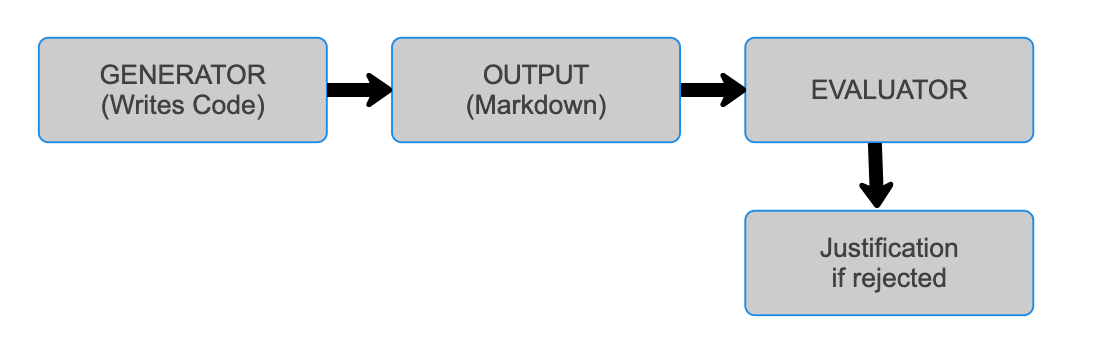
The Generate-Evaluate Loop
Workflow Steps
The Justification Protocol
When the Evaluator rejects an output, the Generator can push back with a written justification. This mirrors real engineering trade-offs:
- CRITICAL / HIGH security findings: Always require fix.
- MEDIUM / LOW severity: Accept spec-based or architectural rationale.
- Full reasoning trail preserved across all cycles.
“Real engineering involves legitimate trade-offs. A system that forces a ‘fix’ for every finding will thrash between contradictory constraints.”
Phase 4: Testing & Review (Gate: SHIP)
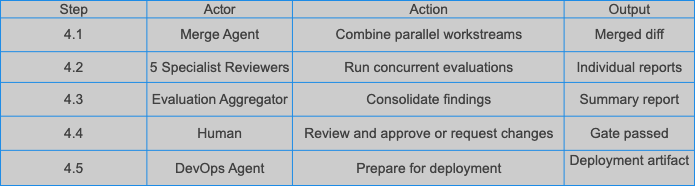
This is the second and final human gate. The human sees all reviewer verdicts at once, with rationale per reviewer.
What the human does: Reviews consolidated findings, approves or pushes back on specific issues.
What agents do: Five specialist reviewers run in parallel against the merged diff.
The Five Parallel Reviewers
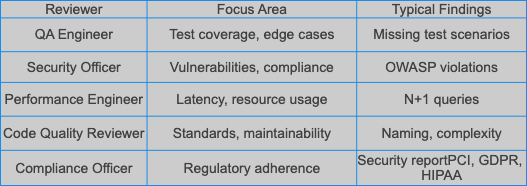
“Reviewers are parallel — 5 specialist reviewers run concurrently against the merged diff. They do not block each other. The gate surfaces disagreement explicitly — not papered over. If they all agree, you approve quickly.”
Workflow Steps
Phase 5: Production (Release & Operations)
The final phase focuses on safe rollout and continuous monitoring.
What the human does: Defines rollback policies and monitors dashboards.
What agents do: Execute canary deployments, monitor SLOs, auto-remediate incidents.
Release Strategy
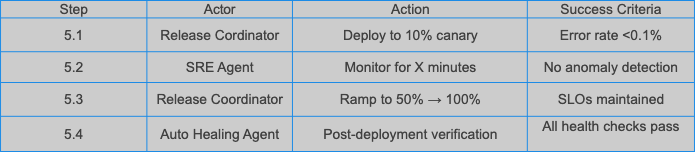
Auto-Rollback Triggers
rollback_triggers:
  - error_rate > 0.001 (0.1%)
  - p99_latency > 500ms
  - any_critical_security_alert
  - database_connection_pool_exhaustion
The Continuous Learning Loop
This is the most overlooked but most valuable pattern. Lessons learned in production feed back into future planning.
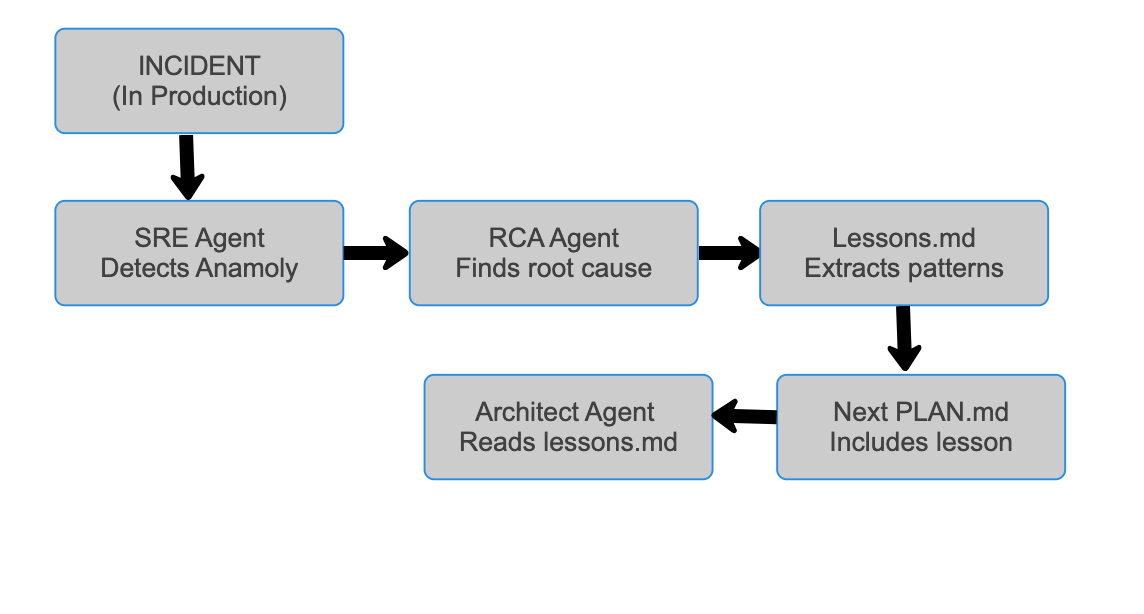
“The compound interest effect: The review cycle counts decrease across features. Each new feature starts with richer pitfall awareness than the last.”
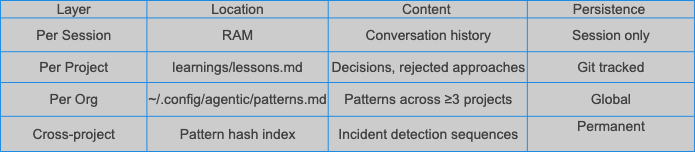
The Memory Bank: Where Knowledge Lives
All artifacts in this workflow are stored as plain text files in a structured directory. This ensures traceability, version control, and agent accessibility.
project/
├── docs/                          # Product document folder
│   ├── srs_v1.md                  # Software requirements spec
│   ├── architecture_v1.md         # Technical design
│   └── product_backlog.md         # Long-term feature list
├── plans/
│   └── PLAN.md                    # Approved execution plan
├── backlog/
│   ├── sprint1.md                 # TODO / IN-PROGRESS / DONE
│   ├── sprint2.md
│   └── ...
├── reports/
│   ├── sprint1-report.md          # Agent post-sprint documentation
│   └── incident-report.md
├── learnings/
│   ├── lessons.md                 # Per-project learnings
│   └── patterns.md                # Cross-project patterns
└── code/                          # Generated code
Memory Layers
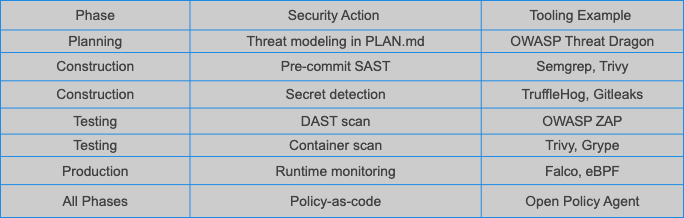
Security: Embedded, Not Bolted On
Security is not a phase in this workflow — it’s a parallel layer that touches every stage.
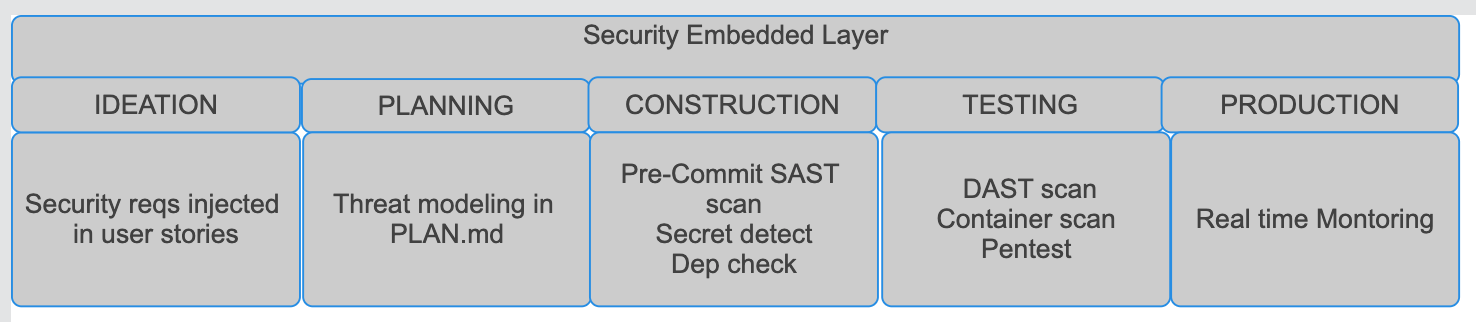
Security Gates by Phase
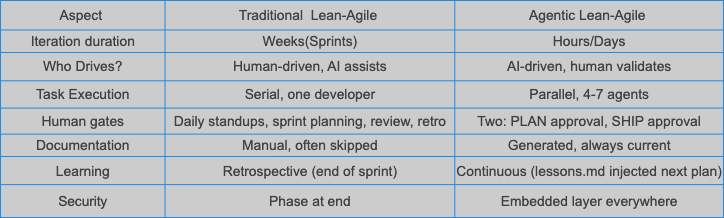
Summary: Agentic vs. Traditional Agile
Conclusion
The move to Agentic AI in the SDLC is not about replacing developers — it’s about transforming how software is conceived, built, and delivered. By shifting from task-based automation to goal-based orchestration, teams can:
- Reduce cycle time from weeks to hours
- Parallelize work across 4–7 specialist agents
- Maintain quality with two lean human gates
- Embed security throughout the pipeline
- Compound learning across every feature
“Software [AI Agents] will write software. And humans will orchestrate, calibrate, and refine the process in real time.”
The future of software delivery is not human OR AI.
It is human AND AI — working as collaborators, not competitors.
References
- Ascendion AAVA+ Reimagines the SDLC With Teams of Digital Co-workers (theCUBE Research, 2025)
- Navigating the software development lifecycle with Agentic AI (Capco, 2025)
- Building an Agentic SDLC in Practice (Vantor Engineering, 2026)
- How I designed the SDLC state machine for agentic coding (DEV Community, 2026)
- Iterative Agents pattern (GitHub Gist, 2026)
- From Idea to Production: Modern AI Engineering Cycle (Zencoder, 2025)
- specsmd: AI-native software development (NPM, 2026)
- AWS AI-Driven Development Lifecycle Platform (AWS Samples, 2026)
- Agentic AI is rewiring the SDLC (CIO.com, 2026)
- Project Management Agentic Workflow (GitHub, 2025)
Photo by Andrea De Santis on Unsplash